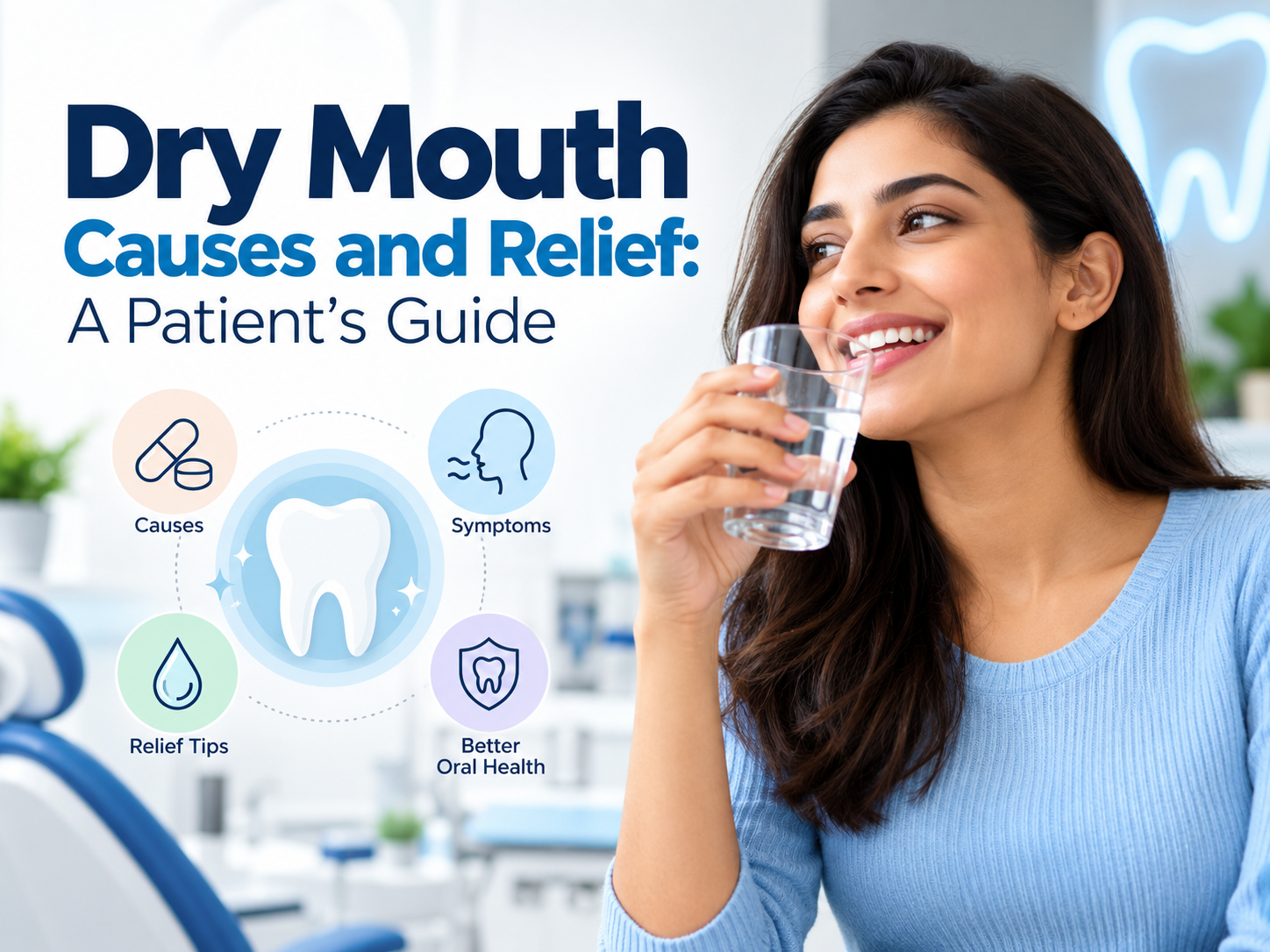
Learn about common dry mouth causes and effective relief strategies to improve your oral health and comfort.
Dry mouth, medically known as xerostomia, is a condition that affects many of my patients at Dr. Varma's Dental Care. It occurs when there is a significant reduction in saliva production. While it might seem like a minor inconvenience, a lack of saliva can lead to discomfort, difficulty speaking, and an increased risk of dental problems. In this article, I will discuss the common causes of dry mouth and the practical steps we can take to find effective dry mouth relief.
What is Dry Mouth and Why Does It Happen?
Saliva is often described as the unsung hero of our oral health. It plays a vital role in keeping our mouths moist, washing away food particles, and neutralising acids produced by bacteria. Without adequate saliva, our teeth and gums become vulnerable. I often tell my patients that saliva is nature's own cavity-fighting fluid, so when its production drops, we must take action to protect the smile.
When you come into the clinic complaining of a sticky feeling or difficulty swallowing, the first thing I do is assess the salivary flow. It is a normal physiological response to dehydration or eating spicy food, but when it becomes chronic, it usually points to an underlying issue. Understanding the root cause is the first step towards finding lasting dry mouth relief.
Common Causes of Persistent Dry Mouth
There are several factors that can disrupt the delicate balance of saliva production. The most common culprit I encounter is medication. Many prescription and over-the-counter drugs list dry mouth as a side effect. This includes antihistamines for allergies, antidepressants, and medications for high blood pressure. I have seen many patients who are on multiple medications and find that their mouth feels constantly parched as a result.
Other causes include stress and anxiety, which can alter breathing patterns, and lifestyle choices such as smoking or excessive caffeine consumption. In some cases, medical conditions like Sjogren's syndrome or diabetes can also lead to reduced saliva flow. It is important to recognise that dry mouth is frequently a symptom of something else rather than a standalone illness.
Immediate Relief and Home Remedies
For patients experiencing occasional dryness, there are several simple strategies I recommend to stimulate saliva production. The most obvious is hydration. Drinking plenty of water throughout the day helps keep the mouth moist. However, water is not the only option. Chewing sugar-free gum, particularly those containing xylitol, can mechanically stimulate the salivary glands to produce more fluid.
I also advise patients to avoid irritants that can worsen the condition. This includes reducing alcohol and caffeine intake, as both can be dehydrating. If you breathe through your mouth at night due to snoring or congestion, using a humidifier in the bedroom can make a significant difference. Maintaining a balanced diet rich in fruits and vegetables also supports overall hydration levels.
Professional Treatments and Oral Care
While home remedies are effective for mild cases, chronic dry mouth requires a more comprehensive approach. If you find that your symptoms persist despite lifestyle changes, it is crucial to seek professional advice. At Dr. Varma's Dental Care, we focus on maintaining excellent oral hygiene to counteract the lack of protective saliva. This often involves using fluoride toothpaste and mouth rinses specifically designed for dry mouth patients.
We also look at the overall health of your mouth. A lack of saliva creates an environment where bacteria thrive, increasing the risk of cavities and gum disease. Regular check-ups are essential to catch these issues early. If necessary, we may recommend specific treatments to manage the condition or refer you to a specialist if an underlying systemic issue is suspected. Our team is dedicated to providing personalised care to ensure your comfort and health.
If you are struggling with persistent dry mouth and are unsure how to manage it, we are here to help. Please book a consultation with us so we can assess your specific situation and create a tailored plan for your oral health.