Learn what happens to your jaw bone after tooth loss and why preserving bone is crucial for dental implants.
Jaw Bone Loss After Tooth Extraction: What You Need to Know
Leaving a gap after extraction leads to jaw bone loss. Learn the consequences and why preserving bone is vital for dental implants.
As a practising dentist, I often discuss the long-term effects of tooth loss with my patients. While the immediate concern is usually the visible gap or the aesthetics of the smile, the silent process occurring beneath the gum line is equally critical. The jaw bone loss after tooth extraction is a natural physiological response that can significantly impact your oral health and the success of future dental work. Understanding this process helps us plan the right treatment to protect your jaw.
The Natural Process of Bone Resorption
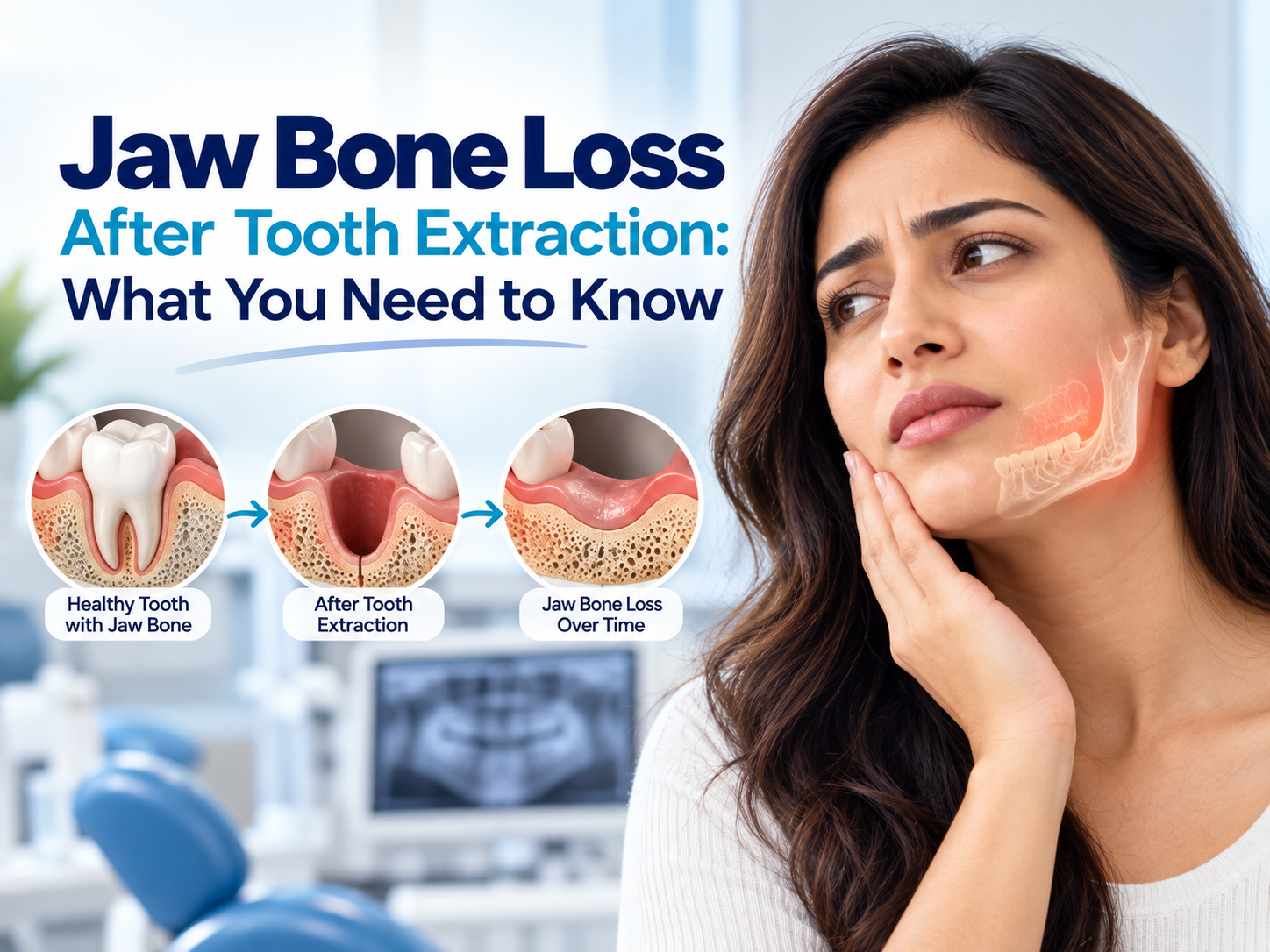
To understand why bone loss happens, we must first look at the relationship between the tooth and the jawbone. A natural tooth is not just a hard structure sitting in the gum. It is supported by a root that extends deep into the jawbone. This root acts like a natural stimulus. When you chew or bite, the forces are transferred through the root to the bone, signalling the body to maintain bone density.
When a tooth is extracted, that stimulus disappears. The body eventually views the empty socket as non-essential tissue. Over time, the body begins a process called resorption, where it absorbs the bone minerals and redistributes them to other parts of the body. This is not a slow trickle. The resorption process begins rapidly, often within the first few months after the extraction. The alveolar bone, which surrounds the tooth sockets, is particularly susceptible to this change.
Consequences of Leaving a Gap Untreated
Ignoring the gap left by a missing tooth can lead to several issues that extend far beyond the missing tooth itself. The most immediate consequence is the shifting of adjacent teeth. As the jawbone shrinks, the remaining teeth lose their anchor. They may begin to tilt or drift into the empty space. This misalignment can create gaps of their own, leading to a domino effect of dental problems.
- Bite issues: Misaligned teeth can cause an uneven bite, making it difficult to chew food properly and leading to jaw strain.
- Supra-eruption: The tooth opposite the gap may grow longer into the space because it has no opposing tooth to wear down.
- Facial appearance: Severe bone loss can lead to a sunken appearance in the cheeks and lips, making a person look older than they are.
Furthermore, the gum tissue in the empty area may recede, exposing more of the tooth root and increasing the risk of decay and gum disease. The stability of the surrounding teeth also decreases, making them more prone to mobility.
Why Bone Preservation Matters for Implants
This is where the importance of preserving bone becomes clear, especially for those considering dental implants. Dental implants are the gold standard for tooth replacement because they mimic the natural tooth root. They require a solid foundation of healthy, dense bone to fuse to, a process known as osseointegration.
If significant bone loss has already occurred, placing an implant may not be possible without first restoring the bone volume. We usually assess the bone density before any procedure. If the bone is too thin or soft, we may recommend a bone graft. This procedure involves adding bone material to the jaw to stimulate new bone growth and increase volume. Without this preservation, the implant would lack the necessary stability to function like a natural tooth.
Restoring Bone and Teeth with Modern Dentistry
Modern dentistry offers solutions to reverse the effects of bone loss. A bone graft can be performed during or immediately after the extraction to preserve the ridge. In some cases, a sinus lift may be necessary for upper jaw implants where the sinuses are close to the bone.
Once the bone has healed and integrated, the dental implant can be placed. This provides a permanent, stable solution that prevents further bone loss. It also helps to maintain the shape of the jaw and the aesthetics of the face. By replacing the root, we restore the biological stimulation that the jawbone needs to stay healthy.
Prevention is always better than cure. If you have recently lost a tooth or are considering extraction, discuss preservation options with your dentist. We can evaluate your jawbone health and recommend the best course of action to protect your smile.
Don't let bone loss compromise your future dental health. Book a consultation with our team today to discuss your options.