Worn teeth, missing teeth, an uncomfortable bite - the signs that full mouth rehabilitation deserves consideration, and what the process really involves.
"Full mouth rehabilitation" is one of those dental phrases that sounds intimidating and expensive - and sometimes it is both. But for the right patient, it is also the treatment that finally restores comfortable chewing, relieves years of jaw discomfort, and reverses the aged appearance that comes from a bite that has quietly collapsed over decades. So how do you know if you actually need it? Here is a plain-English guide to the signs, the process, and what to expect at our Kandivali clinic.
What is full mouth rehabilitation?
Full mouth rehabilitation (FMR) is not a single procedure. It is a coordinated plan to restore all the teeth in both jaws - combining crowns, bridges, implants, and sometimes orthodontics or gum treatment - so that the whole mouth works together the way it was designed to. The goal is not just to fix broken teeth in isolation, but to rebuild the bite: how the upper and lower teeth meet, how the jaw joints move, and how the whole system distributes force.
Signs you might need full mouth rehabilitation
1. Multiple missing or broken teeth
Losing one tooth changes the way you chew on that side. Losing several, or having several broken down to gum level, forces the remaining teeth to overwork - accelerating wear and increasing the chance they will fracture too. Once the pattern has started, patching one tooth at a time rarely stops it.
2. Worn-down teeth (flat, chipped, short)
Teeth should show a natural pattern of small ridges on the biting edges. Teeth that look flat, chipped, translucent at the edges or noticeably shorter than they used to be have lost enamel to grinding, acid erosion or both. Once the wear has removed 30–50% of a tooth's height, the whole bite has collapsed - and rebuilding individual teeth without restoring the bite height is a temporary fix at best.
3. Chronic jaw pain, clicking, or headaches
The jaw joint (TMJ) is one of the most complex joints in the body. When the bite is out of balance for years, the muscles that move the jaw compensate, then fatigue, then hurt. Morning headaches, tender jaw muscles, clicking or popping when opening the mouth, and locking of the jaw are all signals that the bite may need rebuilding - not just medication.
4. A bite that "feels wrong"
Many patients describe it as "I can't find where my teeth are supposed to meet". This is not imagination - it is a bite that has drifted over years of missing, worn or restored teeth, and the brain and muscles can no longer find a stable position.
5. An aged appearance that isn't about wrinkles
When the back teeth wear down or are lost, the lower face collapses upward - chin closer to nose, deep lines around the mouth, thinner lips. Patients often notice they look tired or older than their peers, without being able to identify why. Restoring the correct bite height also restores the correct lower-face height, and the change is often dramatic.
6. Extensive old dentistry that is failing
Crowns and fillings placed twenty or thirty years ago are approaching the end of their useful life at similar times. When multiple old restorations start failing together, a coordinated rehabilitation is usually more efficient - and more predictable - than replacing them one at a time.
What the process actually involves
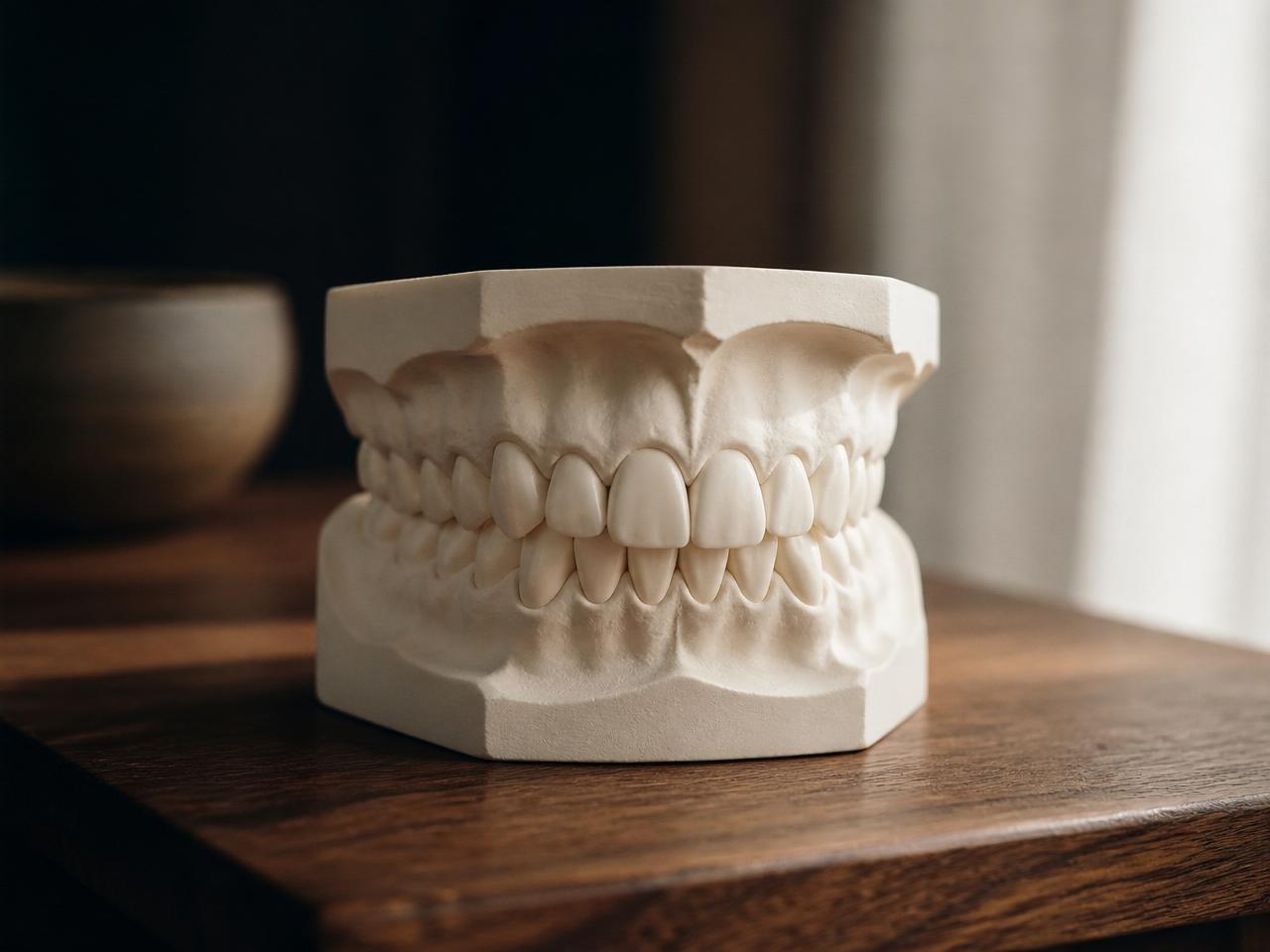
At Dr. Varma's Dental Care in Kandivali, a full mouth rehabilitation begins with a detailed diagnostic phase - never straight to treatment. This includes photographs, digital scans, mounted study models on an articulator (which lets us analyse how your jaw actually moves), CBCT imaging where implants are involved, and a full occlusal examination.
From this, Dr. Saketh Varma plans the case from the bite up. What is the correct bite height? Which teeth can be saved and restored, which need to be extracted, and which spaces need implants? What is the sequence - gum treatment first, then implants, then crowns, then final adjustments? Every case is different, but the plan is presented in writing, with phases, timelines and costs, before any irreversible work begins.
Treatment itself typically runs three to six months, with most appointments spaced two to three weeks apart. Larger cases can extend longer. A temporary set of restorations is often worn during the middle phase so you can test the new bite for weeks before the final zirconia crowns are cemented.
What full mouth rehabilitation is not
It is not a cosmetic upgrade for otherwise healthy teeth - that is smile design, a much more conservative treatment. It is not a package deal where you get 28 veneers regardless of clinical need. And it is not something a good dentist recommends lightly. The right patient benefits enormously; the wrong patient is over-treated. If the answer to "do I really need this?" is not backed by clear clinical findings on your X-rays and scans, ask for a second opinion.
How to know if it is time
Book an assessment. We spend a full appointment examining your teeth, jaw joint, bite and old dentistry, then walk you through what we found - with photos and X-rays on-screen - and explain honestly whether a full rehabilitation is warranted, or whether a smaller phased approach would serve you better. There is no obligation and no upselling. Many patients leave with a plan that is smaller and more affordable than they feared; some leave knowing that a proper rehabilitation is the right long-term investment. Either way, you leave informed.